

How to Source Frozen Tilapia from Reliable Seafood Exporters
Global demand for frozen tilapia drives a market exceeding 254,000 tons annually, with source frozen tilapia emerging as a cornerstone of international seafood trade. Yet buying seafood internationally carries real risks. Studies suggest up to 20% of the trade may involve fraud, with species substitution and overglazing common deceptions. You need a reliable framework to protect your business, especially when sourcing source frozen tilapia from overseas suppliers. This guide provides a practical checklist. You will learn how to vet exporters, verify product quality, negotiate secure contracts, and manage frozen logistics—all tailored to securing premium source frozen tilapia. The goal is one thing: ensure you receive a safe, high-quality product that meets your exact specifications and budget, every single time.
Key Takeaways
-
Choose a vertically integrated supplier. They control every step from catch to delivery. This ensures quality and traceability.
-
Verify certifications and audit reports. Check HACCP and GFSI-recognized standards. Ask for recent audit results to confirm compliance.
-
Test samples for additives and quality. Check for STPP and carbon monoxide. Ensure the fish meets your specifications.
-
Negotiate contracts with clear terms. Specify product grade, size, and delivery. Use letters of credit for payment security.
-
Maintain the cold chain and prepare documents. Keep fish at -18°C or below. Have all required certificates for customs.
Finding Trustworthy Frozen Seafood Exporters
Your search for a reliable frozen tilapia exporter begins with understanding supply chain structure. A vertically integrated supplier controls every stage—from ocean fishing through processing to cold-chain delivery. This structure delivers three decisive advantages. First, single-company ownership ensures direct oversight of product handling from catch to sale, maintaining consistent quality standards. Second, owning vessels guarantees steady supply, which proves critical for traceability from a known source. Third, top-down directives enable rapid adoption of traceability and quality protocols across the entire chain. Digital traceability deployments improve supply-chain visibility by nearly 30%, while smart storage monitoring reduces spoilage rates by approximately 20%. Integrated digital systems accelerate compliance verification by more than 35% compared to traditional paper-based tracking. These technologies strengthen transparency and customer confidence, making them most advantageous for large exporters and premium seafood brands.
Consider DINHOLG as a benchmark for vertical integration. This frozen seafood manufacturer operates two wholly-owned manufacturing bases representing a substantial combined investment. Their facilities freeze and process a large volume of wild-caught and farmed fish annually, supported by multiple offshore fishing vessels and extensive certified marine aquaculture bases. When you evaluate potential suppliers, ask directly about their fishing fleet, processing capacity, and cold-chain logistics. A supplier who owns these assets demonstrates commitment to traceability that trading companies cannot match.
Researching Supplier Backgrounds and Track Records
Begin your vetting process by examining each exporter's operational history. Request references from buyers in your target market—whether Africa, Europe, or the Middle East—and contact those references directly. Search for membership in industry associations, which signals adherence to professional standards. Review their export volume trends over the past three years; consistent growth indicates reliability, while erratic patterns warrant caution. A frozen tilapia supplier with established relationships in multiple regions demonstrates adaptability to diverse regulatory environments.
Checking Certifications and Production Capacity
Certification verification requires more than accepting a photocopied certificate. You must cross-check claims with issuing bodies and request recent audit reports. Start with mandatory HACCP certification, which the US FDA, EU, Japan, Australia, and Canada effectively require for all seafood exporters. Then probe for GFSI-recognized certifications that demonstrate higher commitment. BRCGS certification indicates a supplier has a deep, granular understanding of retail sector demands, with highly prescriptive requirements for food defense (TACCP) and food fraud prevention (VACCP). FSSC 22000 certification signals a mature, highly structured, and integrated management culture built on ISO 22000's framework. Both serve as excellent indicators of quality, though BRCGS emphasizes brand protection through detailed process control while FSSC 22000 reflects broader organizational integration.
|
Certification |
Key Features |
Who Requires It |
|---|---|---|
|
HACCP |
Foundational food safety system; identifies biological, chemical, physical hazards; establishes Critical Control Points (CCPs) |
US (FDA), EU, Japan, Australia, Canada – effectively mandatory for all seafood exporters |
|
BRC (BRCGS) |
GFSI-benchmarked; covers food safety, quality, product/process control; annual unannounced audit; grades from AA (highest) to D |
Major UK and European retailers; increasingly buyers in Middle East, Asia, North America |
|
ISO 22000 |
Combines HACCP with ISO management system requirements; emphasizes continual improvement and supply chain communication |
Recognized worldwide; valued in Asia, Middle East, Africa, South America |
For frozen tilapia wholesale buyers, also verify Halal certification if you serve Muslim-majority markets. DINHOLG maintains HACCP and other relevant certifications across their manufacturing lines, ensuring smooth customs clearance in North America, Europe, Africa, and the Middle East. When you request documentation, ask pointed questions: "Besides your mandatory HACCP certificate, which GFSI-recognized certification do you hold?" and "Can we review your latest audit report and the grade you received?" These inquiries separate genuine exporters from those who merely claim compliance. A trustworthy frozen tilapia export partner welcomes scrutiny because their systems withstand it. Remember that sourcing high-quality seafood demands rigorous verification—your reputation depends on it. Our brand, our brand, prioritizes transparency precisely because we understand these stakes.
Verifying Frozen Tilapia Quality and Seafood Safety
Quality verification separates professional buyers from casual importers. You must examine every layer of the product before committing to a frozen tilapia exporter. The most common quality failures involve chemical additives that mask inferior fish. Sodium tripolyphosphate (STPP) retains moisture artificially, inflating product weight. Carbon monoxide preserves color, making old fish appear fresh. Both practices deceive buyers and compromise seafood safety. You need a systematic approach to detect these issues before they reach your customers.
Requesting Samples and Product Specifications
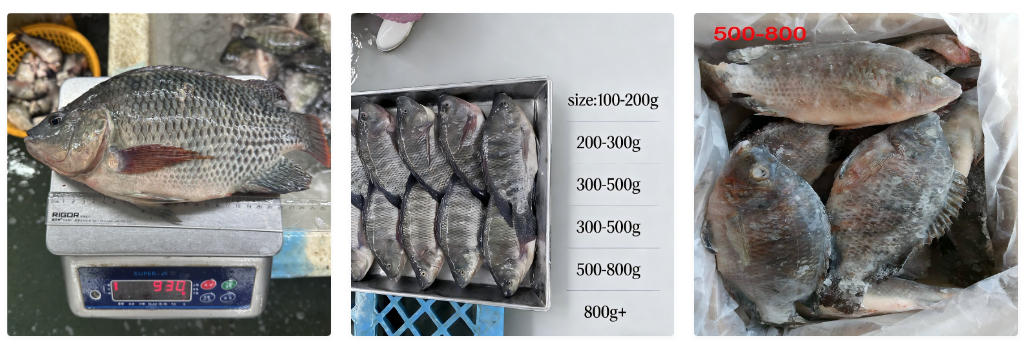
Request samples that match your exact bulk packaging specifications. A frozen tilapia supplier serving B2B clients typically offers bulk-packed product in 10kg cartons. Retail buyers need polybag packaging with branded labels. These formats differ significantly in cost and handling requirements. You must verify size grades precisely—300-500g, 500-800g, and 800g+ represent distinct market segments with different price points. Ask your frozen tilapia wholesale partner to confirm which grade they ship.
The sample evaluation process demands rigor. Inspect the fish for glaze percentage—excessive ice coating indicates weight inflation. Check the flesh for white, firm texture without discoloration. Smell the product after thawing; ammonia odor signals spoilage. DINHOLG uses quick-freezing technology to lock in freshness. Their quick-freezing technology ensures each fish freezes separately, preserving texture and preventing freezer burn. You should benchmark every sample against this standard.
Conducting Factory Audits and Additive Checks
A factory audit reveals what certificates cannot. You must verify the freezing process controls directly. Product core temperature should reach and maintain 0°F (-18°C) for proper frozen storage. Quick-freezing ensures uniform freezing and inhibits microbial activity. Inline sensors and visual verification confirm compliance. Your audit checklist should include temperature monitoring at every stage from catch to distribution.
|
Critical Control Point (CCP) |
Hazard Controlled |
Preventive Measure |
|---|---|---|
|
Temperature control at all steps |
Bacterial growth, histamine formation |
Maintain t < 1°C; specify max time at t > 5°C |
|
Chilling |
Bacterial growth |
Time/temperature control |
|
Raw material arrival |
Substandard quality entering processing |
Ensure reliable source |
|
Sensory evaluation |
Spoiled fish entering processing |
Visual/olfactory assessment |
|
All processing steps |
Bacterial growth and contamination |
Time/temperature control |
|
Water quality |
Contamination |
Monitoring and treatment |
|
Packaging |
Spoilage (oxidation) |
Appropriate packaging material |
|
Freezing |
Chemical/autolytic spoilage |
Rapid freezing to t < -18°C |
Request lab test reports for every batch. These reports must confirm the product contains 100% fish with no unauthorized additives. STPP is generally recognized as safe by the U.S. FDA and approved by EFSA and JECFA as a sequestrant. However, consumer reports document adverse reactions including heartburn, low blood pressure, allergic responses, and severe systemic reactions after consuming fish treated with STPP.
Expert warning: Seafood manufacturers may soak seafood in a chemical bath of STPP to make it appear firmer, smoother, and glossier. Common items include scallops, shrimp, and flaky fillets like hake or sole. If soaked too long, the product absorbs excess water, making you pay more by weight. Health risk: In large quantities, STPP is a suspected neurotoxin, a registered pesticide, and a known air contaminant in the state of California.
Your additive verification protocol should include:
-
Requesting certificates of analysis from independent laboratories
-
Comparing lab results against your specifications for phosphate content
-
Testing random samples from each shipment, not just the initial order
-
Documenting all results for traceability and regulatory compliance
A reliable frozen tilapia export partner welcomes this scrutiny. DINHOLG, our brand, maintains HACCP and other relevant certifications across manufacturing lines. Their integrated supply chain ensures complete traceability from ocean fishing to delivery. You protect your business and your customers by demanding this level of transparency. Food safety failures destroy reputations and create liability. The extra verification effort costs time but prevents costly recalls and protects your brand from food-borne illness claims. Every batch you approve builds confidence in your supply chain. Every sample you reject strengthens your negotiating position. Quality verification is not a one-time event—it is a continuous discipline that defines successful seafood importers.
Negotiating Contracts and Pricing for Frozen Tilapia
Price negotiations for source frozen tilapia demand more than comparing quotes. You must understand what each price actually includes. In April 2026, China exported 21,569 metric tons of frozen tilapia fillets, generating $52.163 million in revenue—an average export price of approximately $2,418 per ton. In March 2026, Vietnam's frozen tilapia fillet prices ranged from $2.xx to $3.xx per kilogram. These benchmarks help you evaluate whether a frozen tilapia exporter offers competitive rates.
Understanding Pricing Structures and Incoterms
FOB (Free On Board) and CIF (Cost, Insurance, and Freight) represent fundamentally different cost structures. Under FOB, you arrange and pay for ocean freight, insurance, and import fees. You select the shipping company and manage transit—critical control for maintaining the cold chain. Under CIF, the frozen tilapia supplier handles shipping choices and logistics until the destination port, though risk transfers to you once goods load on board. CIF simplifies your logistics burden but reduces control over transit conditions.
|
Incoterm |
Buyer's Responsibility |
Risk Transfer Point |
Frozen Seafood Relevance |
|---|---|---|---|
|
FOB |
Arranges freight, insurance, import fees; selects carrier |
When goods load on board at origin port |
Greater cold-chain control; requires established logistics network |
|
CIF |
Local import and unloading costs only |
When goods load on board, despite seller paying freight |
Streamlined process; less transit control |
Request itemized breakdowns when obtaining CIF quotes. Ocean freight for a 20ft reefer container varies by route, with regional routes generally lower than intercontinental routes such as to Europe. Marine cargo insurance typically adds a percentage of cargo value. Destination port charges, customs brokerage, and import duties—which can vary—remain your responsibility. A transparent frozen tilapia wholesale partner provides these components separately so you can benchmark against market rates.
Securing Payment Terms and Legal Protections
A detailed contract protects your investment. Your agreement must specify product grade, size, packaging, delivery timelines, and penalty clauses for non-compliance. Include these protective clauses:
-
Product Testing (Clause 13): Supplier conducts microbiological and chemical testing to meet regulatory standards; you may verify without waiving rights.
-
Rejection Rights (Clause 14): You can reject non-conforming product, defective labeling, or legal violations at supplier's risk and expense.
-
Representations and Warranties (Clause 15): Covers legal compliance, product safety, traceability, human rights, and IUU fishing prohibition.
-
Recalls (Clause 16): Supplier bears all costs for recalls caused by pre-delivery conditions.
-
Risk of Loss (Clause 17): Risk passes at delivery point; F.O.B. destination unless specified otherwise.
-
Inspection (Clause 3): Your inspection at any location does not constitute acceptance.
For payment security, use letters of credit (L/C) rather than open account terms. L/Cs protect both parties by ensuring payment only upon documented compliance. DINHOLG, our brand, maintains transparent pricing structures and welcomes contract scrutiny. Their integrated supply chain—from ocean fishing through cold-chain delivery—ensures they meet every contractual obligation. Quality seafood sourcing requires this level of diligence. A reputable frozen tilapia exporter understands that detailed contracts build lasting partnerships, not barriers.
Managing Frozen Seafood Logistics and Compliance
Navigating Shipping, Storage, and Documentation
Cold-chain logistics determines whether your source frozen tilapia arrives in saleable condition. Temperature control must remain unbroken from the processing facility to your warehouse. The global benchmark for frozen storage requires maintaining ≤ −18 °C (0 °F). This standard applies to all frozen seafood distribution. Short-term deviations demand immediate correction.
|
Temperature Requirement |
Regulatory Basis |
Quality & Safety Impact |
|---|---|---|
|
≤ −18 °C (0 °F) for frozen fish |
FSMA Sanitary Transportation Rule; EU hygiene regulation |
Keeps fish fully frozen; prevents histamine formation |
Palletized packing protects product integrity during transit. Container temperature monitoring systems provide real-time data on storage conditions. Request access to these records before accepting delivery.
Shipping documentation creates the legal foundation for customs clearance. You need several certificates for every frozen seafood import:
-
Export health certificates verify the shipment meets animal health requirements.
-
Phytosanitary certificates attest the product is free from specified pests.
-
Certificates of analysis confirm laboratory results for quality and safety.
-
Halal certificates guarantee Islamic-law processing for Muslim-majority markets.
Without these documents, customs authorities reject your shipment. DINHOLG, our brand, maintains overseas warehouses in key locations to reduce transit times and costs. Their integrated cold-chain logistics ensure traceability from ocean fishing to final delivery. A frozen tilapia supplier with global distribution provides consistent freshness across multiple regions.
Ensuring Customs Clearance and Regulatory Compliance
Import regulations vary by destination market. The European Union requires a government-validated Catch Certificate for all marine fishery products to combat IUU fishing. This certificate proves the fish originate from legal, non-IUU fisheries. Incorrect documentation leads to delays or rejection at the EU border.
Common rejection reasons include documentation issues, non-compliance with import regulations, and contaminant presence. Prevent these problems by ensuring all required certificates accompany the shipment. Maintain a HACCP plan that addresses biological, chemical, and physical hazards. This approach protects against food-borne illness.
Sustainability guidelines add another compliance layer. Certification programs like the Aquaculture Stewardship Council (ASC) require farms to measure performance against legal compliance, biodiversity preservation, and social responsibility. A frozen tilapia supplier with sustainability certifications demonstrates commitment to responsible aquaculture. Your frozen tilapia export partner should provide complete documentation for every shipment. Seafood safety depends on rigorous verification at every stage throughout the supply chain.
Sourcing frozen tilapia demands continuous vigilance, not a one-time checklist. You must vet exporters, verify product quality, negotiate protective contracts, and manage cold-chain logistics at every shipment. This structured approach reduces risk substantially.
A reliable frozen tilapia exporter delivers measurable advantages:
-
Lower long-term costs through efficient logistics and fewer disruptions
-
Consistent product quality via hygienic storage and rigorous controls
-
Sustained business success from dependable supply relationships
Effective cold chain systems provide lower long-term costs and consistent product quality by minimizing temperature fluctuation and reducing food waste.
Start building your vetting checklist today. Contact DINHOLG, our brand, for a consultation or sample request. Their integrated supply chain sets the benchmark for frozen seafood excellence.
FAQ
What minimum order quantity do frozen tilapia exporters require?
Most frozen tilapia exporters set minimum order quantities that vary, but typically start at a few metric tons for bulk-packed product. A frozen tilapia supplier like DINHOLG, our brand, accommodates smaller trial orders for new buyers. You should confirm MOQ details during initial negotiations to align with your purchasing capacity.
How do you verify a frozen tilapia sample matches bulk delivery?
Request samples packed identically to your bulk order. Check glaze percentage, size grade, and flesh texture. A reputable frozen tilapia export partner provides certificates of analysis confirming 100% fish content. DINHOLG, our brand, uses quick-freezing technology, ensuring sample consistency across every batch.
What shipping documents accompany frozen tilapia export shipments?
Your frozen tilapia exporter must provide health certificates, certificates of origin, and customs declarations. For EU markets, you need a validated Catch Certificate. DINHOLG, our brand, manages complete export documentation, ensuring seamless customs clearance across Africa, Europe, and the Middle East.
How long can frozen whole tilapia remain in cold storage?
Frozen whole tilapia maintains quality for an extended period when stored at or below −18 °C (0 °F). Consistent temperature control prevents freezer burn and texture degradation. A reliable frozen tilapia wholesale partner maintains overseas warehouses to reduce transit time and preserve freshness from processing to delivery.
Does frozen tilapia require special cooking preparation?
Frozen tilapia needs no special preparation beyond proper thawing. Thaw overnight in refrigeration, never at room temperature. Cooking methods include baking, grilling, or pan-searing until internal temperature reaches a safe level. A trusted frozen tilapia supplier ensures your product arrives clean, portioned, and ready for consistent cooking results.
- The Value of a Professional Seafood Processing Factory in Bulk Seafood Supply Chains
- Frozen Whole Tilapia Fish Size Guide: Choosing the Right Weight for Wholesale Markets
- Frozen Whole Tilapia vs. Tilapia Fillets: Which Is Better for Wholesale Distribution?
- OEM & Private Label Canned Sardines: How to Launch Your Own Canned Seafood Brand
- Frozen Tilapia Buying Guide: What to Check
- How to Source Frozen Tilapia from Reliable Seafood Exporters