

How to Customize Sauce Formulations for Private Label Canned Mackerel
For seafood importers, wholesalers, and supermarket distributors, launching a private label canned mackerel product involves more than choosing a fish size and printing a brand label. The sauce formulation plays an equally important role in how consumers perceive the product. A rich tomato sauce, mild vegetable oil, traditional brine, or spicy seasoning can appeal to different customer groups and create opportunities for product differentiation.
However, developing a successful canned mackerel product requires balancing flavor, fish quality, sauce consistency, food safety, production stability, and target market preferences. A formulation that works well in one country may not deliver the same results in another.
So, how can buyers customize sauce formulations when working with an OEM canned mackerel factory? This guide explains the main sauce options, key formulation considerations, customization process, and important questions to discuss before placing a bulk order.
1. Why Does Sauce Formulation Matter for Private Label Canned Mackerel?
Sauce is one of the most noticeable features of canned mackerel. It influences the product's taste, aroma, texture, appearance, and overall eating experience. For private label brands, these characteristics help distinguish one product from competing canned seafood products on supermarket shelves.
For example, consumers who prefer ready-to-eat meals may look for mackerel in a rich tomato sauce, while foodservice buyers may prefer vegetable oil or brine for greater flexibility in cooking.
For international distributors, customized sauce formulations offer several commercial advantages:
- Market adaptation: Develop flavors that match local eating habits and consumer preferences.
- Product differentiation: Build a recognizable product range instead of selling generic canned fish.
- Flexible positioning: Offer different flavors for retail, catering, and wholesale channels.
- Brand development: Create signature recipes that support long-term brand recognition.
- Portfolio expansion: Introduce additional flavors without changing the main seafood category.
For buyers developing a private label canned mackerel range, sauce selection should therefore be considered during the initial product planning stage rather than after packaging design is completed.
2. What Sauce Options Are Available for Canned Mackerel?
Different sauces create different product characteristics. The right option depends on the target market, intended use, retail positioning, and expected price range.
Tomato Sauce
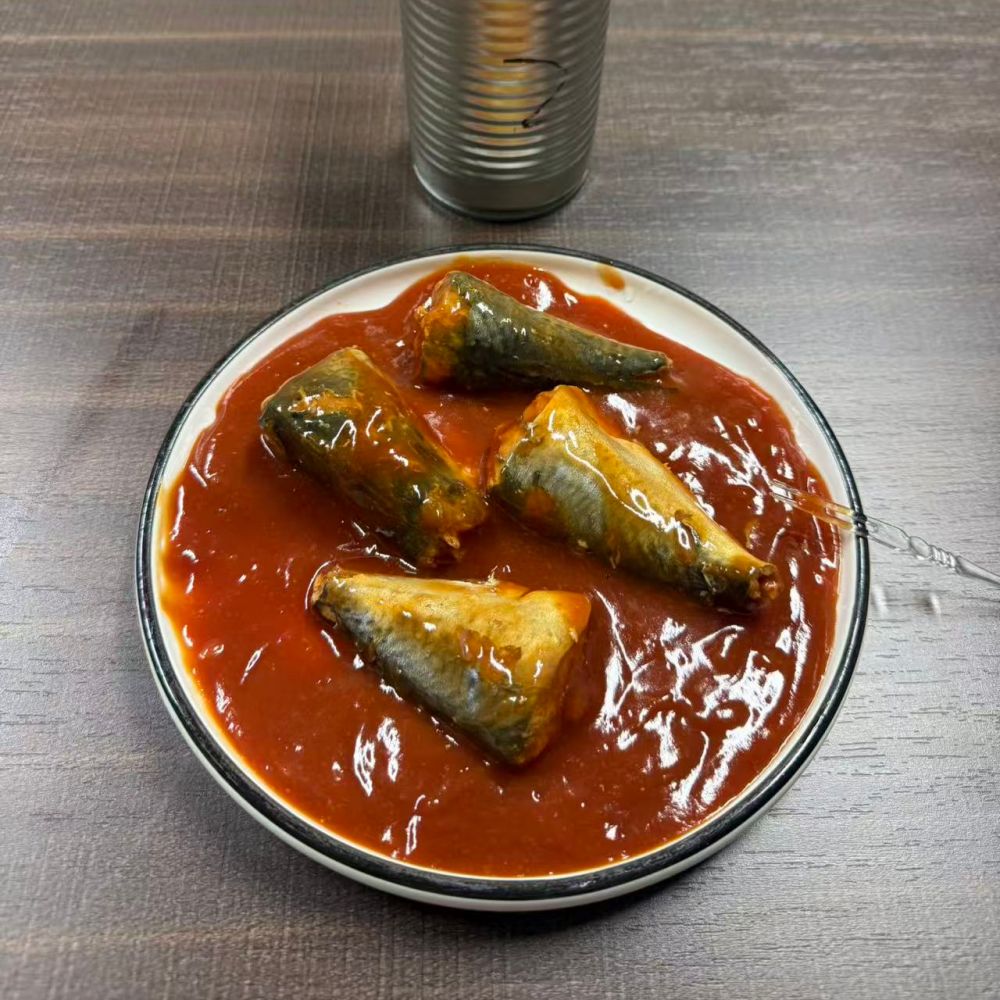
Tomato sauce is one of the most familiar options for canned mackerel. It provides a rich color, balanced acidity, and savory flavor that works well with rice, bread, pasta, and everyday home cooking.
Buyers can discuss adjustments to tomato concentration, sweetness, acidity, salt level, and overall sauce consistency. A thicker formulation may create a richer eating experience, while a lighter sauce may be more suitable for consumers who prefer a less intense flavor.
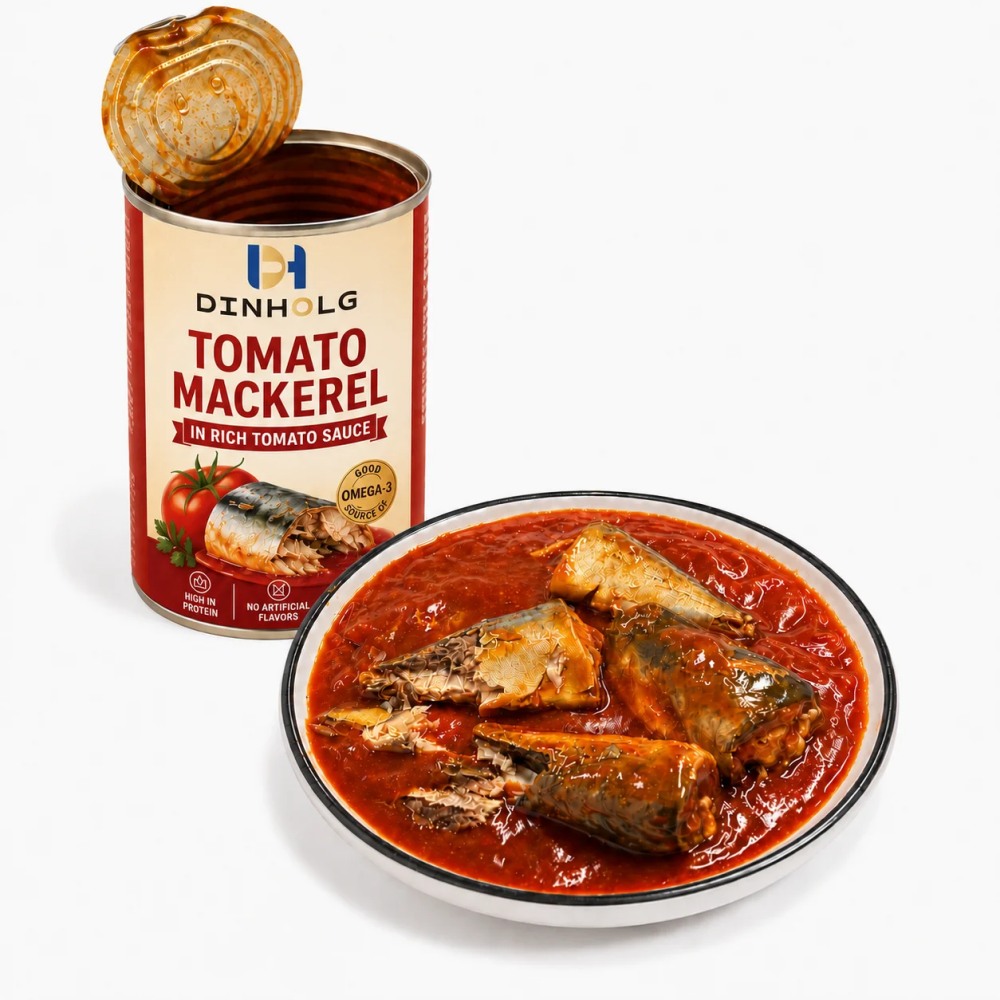
DINHOLG currently offers canned mackerel in tomato sauce in 235g and 425g formats, with customization options for sauce proportions and private label packaging.
Vegetable Oil
Vegetable oil provides a more neutral flavor profile and allows the natural taste of mackerel to remain prominent. It is suitable for consumers who want to use canned fish in salads, sandwiches, pasta, and cooked dishes.
For this option, buyers should specify the preferred oil type, flavor characteristics, salt level, and desired oil-to-fish ratio. The oil selection should also be evaluated for flavor stability and compatibility with the complete canning process.
Brine
Brine is a relatively simple formulation based on water and salt. It offers a straightforward flavor profile and can work well for consumers who prefer to season canned fish themselves.
When developing a brine-based product, buyers should consider salt intensity, fish texture, and the intended use. Salt concentration should be established through product trials and food safety validation rather than estimated solely from taste preferences.
Chili and Spicy Sauce
Spicy canned mackerel can appeal to consumers who enjoy stronger seasoning. Depending on the target market, the formulation may include chili ingredients, garlic, pepper, and other approved seasonings.
Buyers can discuss different spice levels, from mild warmth to a more pronounced chili flavor. The objective is to create a consistent taste that suits the intended consumer group without overpowering the natural flavor of the fish.
3. Key Factors to Consider When Customizing a Sauce Formula
Choosing a sauce type is only the beginning. A successful formulation needs to maintain its quality throughout manufacturing, thermal processing, storage, and distribution.
1. Flavor Balance
Sweetness, acidity, saltiness, and seasoning should work together. For tomato sauce, the balance between tomato flavor, sweetness, and acidity is particularly important. For spicy products, chili intensity should complement rather than mask the fish flavor.
2. Sauce-to-Fish Ratio
The amount of sauce in each can affects the eating experience, product appearance, and net product composition. Buyers should communicate whether they prefer more fish content or a greater amount of sauce.
For bulk production, the selected ratio must be defined clearly in the product specification so that different batches maintain consistent filling results.
3. Sauce Thickness and Texture
Viscosity influences how sauce coats the fish and how the product looks when opened. A sauce that is too thin may create a watery appearance, while an overly thick sauce may affect filling and processing operations.
Manufacturers should evaluate sauce consistency through sample preparation and production trials.
4. Ingredient Selection
Ingredient choices should match the target market's requirements and the product's intended positioning. Buyers may discuss tomato ingredients, vegetable oils, salt, spices, and other permitted food ingredients.
Any requests for reduced salt, specific ingredient exclusions, or additive restrictions should be clearly stated before sample development. Ingredient declarations must accurately reflect the final formulation.
5. Stability During Processing and Storage
Canned fish undergoes sealing and thermal processing to achieve commercial sterility. Sauce ingredients, acidity, viscosity, fish size, and filling conditions can affect heat transfer and finished-product characteristics.
Any significant formulation change must be evaluated by qualified food processing personnel. The final thermal process should be validated for the specific product, can size, filling conditions, and equipment. Buyers should never assume that a sauce recipe can be changed without reviewing its processing requirements.
4. How to Adapt Canned Mackerel Flavors for Different Markets
International buyers should avoid assuming that one sauce formulation will suit every market. Local food habits, retail positioning, and consumer expectations can influence product development.
| Target Market / Channel | Possible Sauce Direction | Product Considerations |
|---|---|---|
| Supermarket retail | Tomato sauce | Balanced flavor, attractive appearance, convenient packaging |
| Foodservice and catering | Vegetable oil or brine | Versatile usage and consistent bulk specifications |
| Markets with demand for spicy foods | Chili or spicy sauce | Adjustable spice intensity and seasoning balance |
| Private label premium range | Customized signature sauce | Distinctive flavor, ingredients, and brand positioning |
These are starting points for product development, not fixed regional preferences. Importers should use local market research, distributor feedback, and consumer tasting results to determine the final formula.
For a new brand, launching two or three clearly differentiated products is often more manageable than introducing too many flavors at once.
5. What Can You Customize with an OEM Canned Mackerel Factory?
Working with an experienced OEM canned mackerel factory allows importers to customize more than just the sauce. The complete product specification can be developed around the brand's sales strategy and target market.
Typical customization options include:
- Sauce formulation: Tomato sauce, vegetable oil, brine, chili, and selected seasoning combinations.
- Sauce proportions: Adjust the relationship between fish and sauce according to the agreed product specification.
- Can sizes: Select different capacities for retail, wholesale, and foodservice applications.
- Can materials and printing: Discuss lithographic printed tins or paper sleeve packaging.
- Lid styles: Choose easy-open ends or conventional lids depending on product and market requirements.
- Outer carton packaging: Customize carton artwork, packing quantities, and shipping presentation.
- Private label branding: Apply your own logo, colors, product information, and approved label artwork.
DINHOLG's canned mackerel range includes 235g and 425g tomato sauce products, with OEM and ODM support for flavor, packaging, labels, and sauce proportions. Buyers can also discuss product samples before confirming a bulk production specification.
6. How Does the Private Label Canned Mackerel Development Process Work?
A well-organized development process helps prevent misunderstandings between buyers and manufacturers. For a new private label canned fish project, the following steps provide a practical starting point.
- Define the target market: Identify the destination country, sales channels, expected retail price, and consumer preferences.
- Select the fish specification: Confirm the mackerel type, fish size, cut, preparation method, and can format.
- Choose the sauce direction: Select tomato sauce, vegetable oil, brine, chili, or a customized flavor.
- Discuss formulation details: Confirm taste expectations, sauce proportion, ingredient requirements, and desired texture.
- Evaluate samples: Review fish quality, sauce flavor, appearance, and packaging before approving the product.
- Confirm technical requirements: Finalize the formulation, processing validation, can specifications, labeling, and food safety documentation.
- Approve packaging artwork: Check brand design, ingredient declarations, nutrition information, and destination-market labeling requirements.
- Arrange bulk production: Confirm MOQ, quotation, lead time, inspection arrangements, and shipping terms.
For international food buyers, sample approval is particularly important. A sauce formulation may taste different after thermal processing than it does during initial preparation. Buyers should therefore evaluate the finished canned sample rather than approving a recipe based only on an unprocessed sauce sample.
7. Why Choose DINHOLG for Private Label Canned Mackerel?
Choosing a supplier for long-term private label cooperation requires more than comparing product prices. Buyers should consider raw material availability, production capacity, food safety controls, customization flexibility, and export experience.
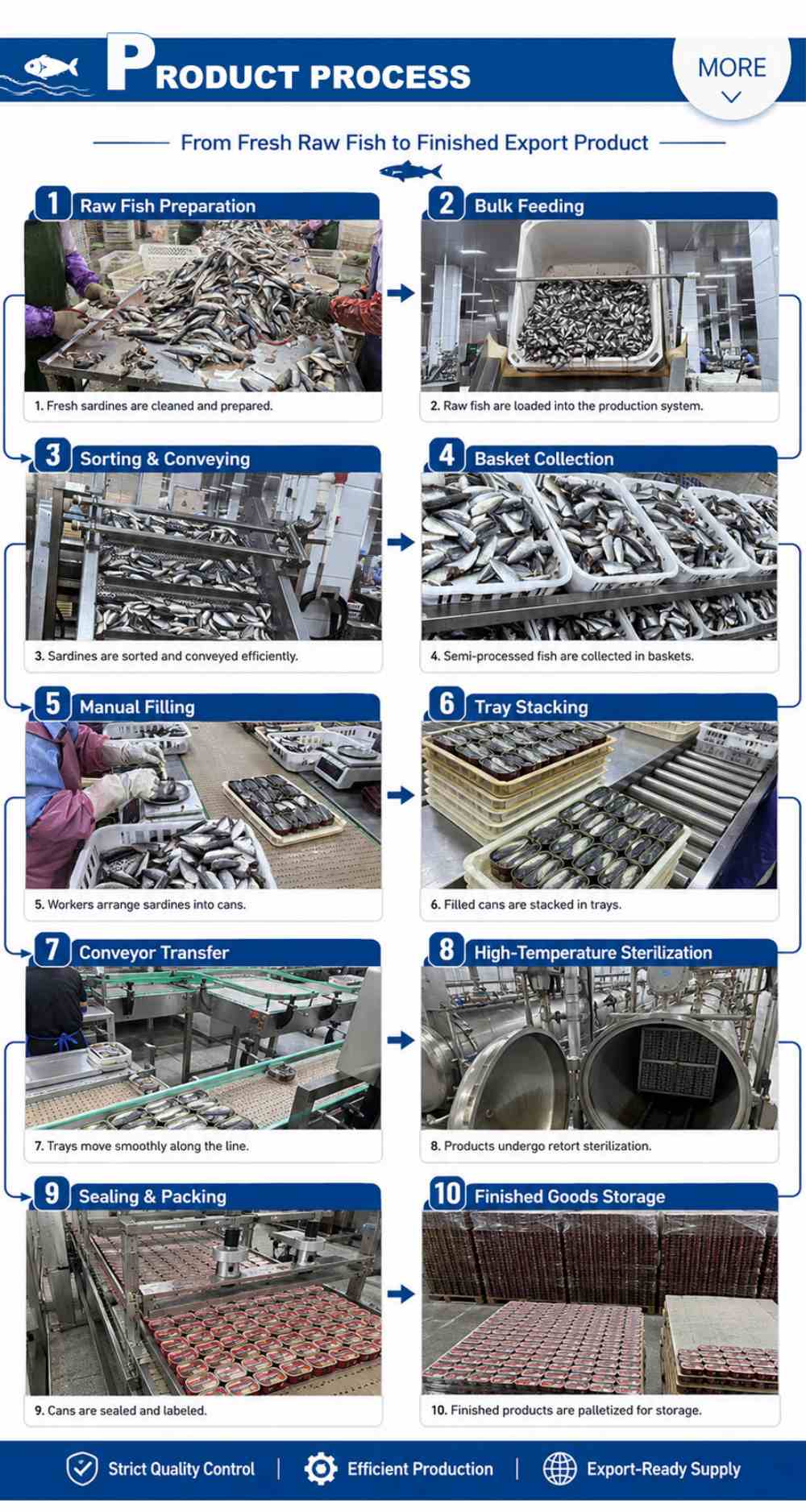
DINHOLG works with Fujian Hai Ding Frozen Food Co., Ltd., a canned seafood manufacturing base established in 2015. Its production operations support canned fish processing, OEM/ODM manufacturing, and customized packaging for international distributors and private label brands.
Key capabilities include:
- Automated canned seafood production and thermal processing.
- Customization of tomato sauce, vegetable oil, brine, chili, and other sauce directions.
- Flexible can sizes and packaging options.
- HACCP-based food safety management and relevant international certifications.
- Raw material inventory planning to support production continuity.
- Export documentation and international shipping support.
DINHOLG's published product specifications include 235g and 425g canned mackerel in tomato sauce, with a stated shelf life of three years under normal room-temperature storage conditions when handled and stored as specified.
For importers looking to develop their own canned seafood brands, canned mackerel products from DINHOLG provide a starting point for discussing product sizes, sauce options, and private label requirements.
As a seafood manufacturer and exporter, DINHOLG's manufacturing operations support international buyers with canned seafood customization and bulk supply services.
Whether you are launching your first canned mackerel SKU or expanding an existing canned fish portfolio, the best approach is to define your target market, test the finished product, and confirm all technical specifications before starting mass production.
Frequently Asked Questions
1. Can I customize the sauce formulation for private label canned mackerel?
Yes. OEM manufacturers can discuss different sauce types, including tomato sauce, vegetable oil, brine, and chili. Buyers can also discuss flavor balance, sauce proportions, and selected seasonings according to their target market requirements.
2. What sauce options are available for canned mackerel?
Common options include tomato sauce, vegetable oil, brine, and spicy chili sauce. Customized seasoning combinations may also be discussed depending on the manufacturer's formulation and production capabilities.
3. Can an OEM canned mackerel factory customize the fish-to-sauce ratio?
Yes. Buyers can discuss the desired fish content and sauce proportion during product development. The final filling specification should be confirmed through samples and production validation to maintain consistency between batches.
4. What information should I provide when requesting a private label canned fish quotation?
Provide your target market, preferred fish type, can size, sauce flavor, estimated order quantity, packaging requirements, and any food safety or certification requirements. Brand artwork and labeling specifications can be confirmed during the next development stage.
5. Can I request samples before placing a bulk order?
Yes. Requesting finished product samples is a practical way to evaluate fish texture, sauce flavor, appearance, and packaging. DINHOLG's published canned mackerel product information states that samples are available for quality and taste evaluation before formal bulk orders.
- What Is the Difference Between Gutted and Scaled Tilapia and Whole Round Tilapia?
- How to Customize Sauce Formulations for Private Label Canned Mackerel
- How to Choose Wholesale Canned Fish and Frozen Whole Tilapia for Different Markets
- What Are the Most Common Frozen Tilapia Sizes for Wholesale Buyers?
- Tinplate vs. Aluminum Cans: Choosing the Right Packaging for Your Canned Sardines
- The Value of a Professional Seafood Processing Factory in Bulk Seafood Supply Chains