

What Is the Difference Between Gutted and Scaled Tilapia and Whole Round Tilapia?
When purchasing frozen tilapia in bulk, buyers often come across different processing descriptions, including gutted and scaled tilapia and whole round tilapia. Although both products come from the same fish species, the main difference is how much cleaning and preparation has been completed before freezing.
Gutted and scaled tilapia has had its internal organs and external scales removed, making it more convenient for buyers who want to reduce preparation work. Whole round tilapia, on the other hand, is supplied in its original fish form, with the head, tail, fins, scales, and internal organs generally retained.
For seafood importers, wholesalers, distributors, and foodservice businesses, choosing between these two formats can affect purchasing costs, processing requirements, usable yield, storage, and customer preferences. Understanding these differences helps buyers select the right frozen tilapia specification for their target market.
What Is Gutted and Scaled Tilapia?
Gutted and scaled tilapia refers to fish that has undergone two basic preparation steps before freezing: removing the internal organs and taking off the external scales.
During gutting, processors open the abdominal cavity and remove the internal organs. The fish is then cleaned according to the agreed processing standard. Scaling removes the outer scales from the skin, making the fish easier to prepare for cooking.
Depending on the buyer's requirements, gutted and scaled tilapia may still retain its head, tail, fins, and skin. This is an important detail because gutted and scaled fish should not automatically be confused with HGT (Headed, Gutted, and Tailed) fish.
For wholesale buyers, this processing format offers several practical advantages:
- Less preparation work: Buyers do not need to remove the internal organs and scales themselves.
- Convenient foodservice preparation: Restaurants and catering businesses can move more quickly into washing, seasoning, cutting, and cooking.
- Reduced processing waste: Certain cleaning operations have already been completed before the product reaches the buyer.
- More consistent preparation: Standardized processing can help commercial kitchens maintain a consistent workflow.
However, buyers should confirm the exact processing details with their supplier. Some suppliers may use different specifications for belly cleaning, scale removal, head retention, and trimming.
What Is Whole Round Tilapia?
Whole round tilapia is supplied as a complete fish without the main processing steps of gutting, scaling, or removing the head and tail. It retains its original body structure and is commonly selected by seafood wholesalers, traditional fish markets, and buyers with their own processing facilities.
For importers, one important advantage of whole round tilapia is purchasing flexibility. Buyers can decide how much preparation is required after receiving the shipment. Some fish can be sold in their original form, while others can be cleaned, scaled, cut, or further processed according to local demand.

DINHOLG supplies Wholesale Frozen Whole Tilapia Fish for international importers, distributors, supermarkets, and catering wholesalers.
The product is available in different weight grades, including 100–200g, 200–300g, 300–500g, 500–800g, and 800g+. Buyers can select suitable sizes according to their distribution channels and local market preferences.
Whole round tilapia is particularly useful for businesses that want greater control over downstream processing, product presentation, and inventory allocation.
Gutted and Scaled Tilapia vs. Whole Round Tilapia: Key Differences
The most important difference is the amount of preparation completed before the fish is delivered. This influences convenience, processing costs, product weight, and the way each format fits into a seafood distribution business.
| Comparison | Gutted & Scaled | Whole Round |
|---|---|---|
| Internal organs | Removed | Retained |
| External scales | Removed | Retained |
| Head and tail | Usually retained | Retained |
| Preparation work | Less required | More required |
| Purchase weight | Lower after processing | Includes the complete fish |
| Typical buyers | Restaurants and foodservice operators | Wholesalers, traditional markets, and processors |
One point worth remembering is that a lower purchase price per kilogram does not always mean a lower overall operating cost. Processing labor, waste, usable yield, packaging, and transportation should all be included when comparing the two formats.
Which Tilapia Format Is Better for Wholesale Buyers?
There is no single answer for every importer. The better choice depends on the target market, available labor, customer preferences, and the buyer's existing seafood distribution system.
Gutted and scaled tilapia may be more suitable for:
- Restaurants that want to reduce basic fish preparation time.
- Catering companies handling large quantities of seafood.
- Retail businesses that prefer cleaned fish for customer convenience.
- Foodservice distributors supplying kitchens with limited processing facilities.
Whole round tilapia may be more suitable for:
- Traditional wholesale fish markets where customers prefer complete fish.
- Importers with their own cleaning and processing facilities.
- Distributors supplying different customer groups with varying preparation needs.
- Businesses that want to control the processing stage after import.
For example, a seafood importer supplying traditional markets in Africa may prioritize whole round tilapia because customers often purchase fish according to individual size and local preparation preferences. Meanwhile, a restaurant supplier may prefer cleaned fish to simplify kitchen operations.
DINHOLG focuses on bulk frozen seafood supply for international buyers. Its Frozen Fish product range includes tilapia and other frozen seafood products for wholesale distribution and foodservice applications.
How Does Processing Affect Tilapia Weight and Purchasing Costs?
Processing has a direct effect on the final weight of a fish. When internal organs and scales are removed, the resulting product weighs less than the original whole round fish.
This means buyers should avoid comparing quotations based only on the price per kilogram. A gutted and scaled fish may have a higher unit price because additional processing has already been completed. However, the buyer may save money on labor, equipment, and waste handling.
Whole round tilapia may have a lower purchase price per kilogram, but the buyer must account for the weight of the parts removed during preparation.
For a more accurate comparison, wholesale buyers should consider the following factors:
- Processing yield: Estimate the usable fish weight after cleaning and preparation.
- Labor costs: Calculate the expense of cleaning and scaling fish locally.
- Market selling price: Check whether customers are willing to pay more for prepared fish.
- Storage and handling: Compare packaging, frozen storage, and transportation requirements.
- Glazing percentage: Confirm how much protective ice is included in the declared shipment weight.
For frozen seafood procurement, it is also important to distinguish net fish weight from gross weight and glazing weight. Buyers should specify these details in the purchase agreement to avoid misunderstandings during delivery.
What Should Buyers Check When Ordering Frozen Tilapia?
Whether purchasing whole round or gutted and scaled tilapia, product specifications should be confirmed before placing a bulk order. A clear specification helps suppliers understand the required product and reduces the risk of receiving an unsuitable shipment.
Product processing form
Clearly state whether the fish should be whole round, gutted and scaled, head-on gutted, headless gutted, or another customized format. Avoid using general descriptions that could be interpreted differently by different suppliers.
Fish size and weight grading
Specify the required weight range for each fish. DINHOLG's whole tilapia product lists several grading options, allowing buyers to match fish sizes with their target retail or wholesale channels.
Freezing method
Buyers should confirm whether the fish is supplied through Individual Quick Freezing (IQF) or Block Quick Freezing (BQF). IQF freezes individual fish separately, making it easier to handle and separate individual units. BQF generally freezes fish together in a block or packed unit. The suitable method depends on storage, distribution, and handling requirements.
Glazing and packaging
Confirm the required glazing percentage, carton weight, inner packaging, and labeling details. DINHOLG lists 0%, 10%, and 20% glazing options for its frozen whole tilapia product, subject to order specifications and confirmation.
Food safety and cold-chain management
Check the supplier's quality inspection procedures, certifications, traceability information, and storage conditions. Frozen seafood should remain under the agreed temperature-controlled conditions throughout transportation and storage.
For additional purchasing considerations, buyers can also refer to DINHOLG's Frozen Tilapia Buying Guide, which covers product quality, glazing, storage, and supplier evaluation.
Why Choose DINHOLG for Wholesale Frozen Tilapia?
For international seafood importers, choosing a supplier involves more than finding a competitive price. Consistent product specifications, reliable production capacity, quality control, and export experience are equally important.
DINHOLG operates an integrated seafood supply and trading business supported by its own factories. Its frozen seafood operations serve importers, wholesalers, distributors, supermarkets, and foodservice businesses in international markets.
For frozen whole round tilapia, DINHOLG offers several advantages:
- Standardized size grading: Multiple weight ranges help buyers plan inventory and meet different market requirements.
- IQF and BQF options: Freezing methods can be discussed according to the product specification.
- Flexible glazing: Different glazing levels are available for the whole tilapia product.
- Bulk export capability: The company supports container-based wholesale procurement.
- Quality management: Product inspection and food safety controls support consistent export supply.
- Customized services: Packaging and private-label requirements can be discussed for suitable orders.
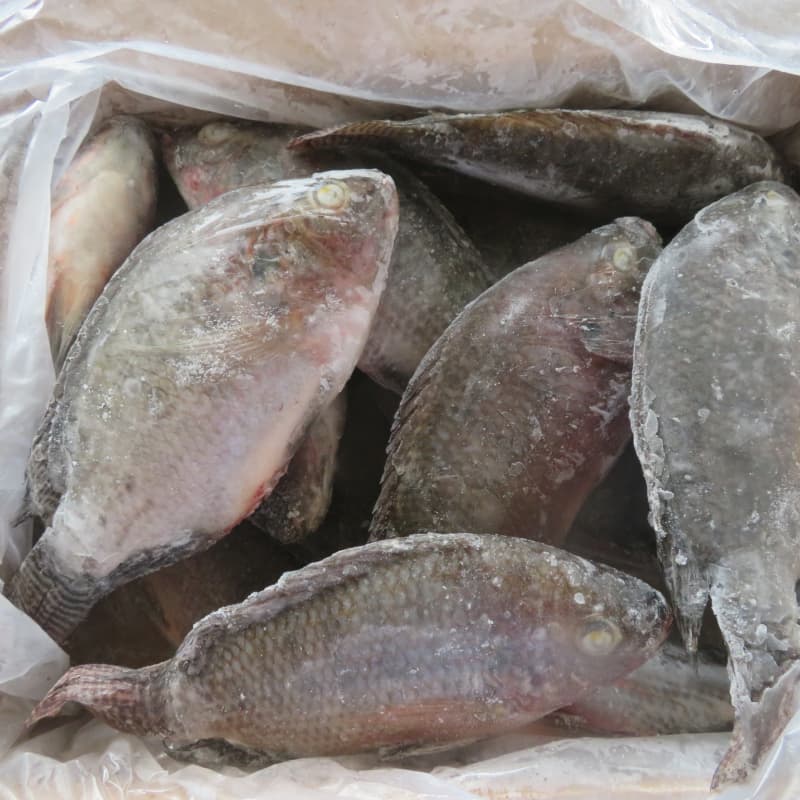
DINHOLG's current dedicated tilapia product focuses on whole round fish rather than claiming that every processing format is available as a standard SKU. Buyers interested in additional processing requirements should confirm feasibility, specifications, and production arrangements with the sales team before ordering.
For importers looking for a dependable frozen whole tilapia supplier, discussing the target weight grade, freezing method, glazing, packaging, and destination market in advance is a practical way to start the procurement process.
Frequently Asked Questions About Gutted and Scaled Tilapia
What is the main difference between gutted and scaled tilapia and whole round tilapia?
The main difference is processing. Gutted and scaled tilapia has its internal organs and external scales removed before freezing. Whole round tilapia retains its original fish form, including the internal organs and scales. The latter requires more preparation before cooking or further processing.
Does gutted and scaled tilapia still have its head?
Yes, in most standard specifications, gutted and scaled tilapia retains its head, tail, and fins. However, buyers should confirm this with the supplier because processing requirements can vary. Headless gutted fish is a different product specification.
Is whole round tilapia cheaper than gutted and scaled tilapia?
Whole round tilapia may have a lower price per kilogram because it requires less processing. However, the final cost depends on usable yield, local labor expenses, processing waste, and the buyer's sales channel. Comparing the total cost rather than the initial price provides a more accurate result.
Which type of frozen tilapia is better for restaurants?
Gutted and scaled tilapia can be more convenient for restaurants because it reduces preparation time. Whole round tilapia may be more economical for restaurants with their own cleaning and processing teams. The choice depends on kitchen capacity and menu requirements.
What does whole round mean in frozen fish products?
Whole round means the fish is supplied in its original complete form without gutting, scaling, or heading. The head, tail, fins, scales, and internal organs are generally retained.
Does DINHOLG supply whole round frozen tilapia?
Yes. DINHOLG's dedicated frozen tilapia product is Whole Round Tilapia, with different weight grades, IQF/BQF freezing options, and glazing specifications. Buyers can contact the company to confirm current availability and bulk order requirements.
What information should I provide when requesting a wholesale tilapia quotation?
Provide the required product form, fish weight range, freezing method, glazing percentage, carton weight, order quantity, destination port, and any labeling or certification requirements. These details help the supplier prepare a more accurate quotation.
Choosing between gutted and scaled tilapia and whole round tilapia ultimately comes down to how much processing your business wants to handle. By comparing product specifications, processing costs, and customer preferences, seafood importers can make better purchasing decisions and build a more efficient frozen seafood supply chain.
- What Is the Difference Between Gutted and Scaled Tilapia and Whole Round Tilapia?
- How to Customize Sauce Formulations for Private Label Canned Mackerel
- How to Choose Wholesale Canned Fish and Frozen Whole Tilapia for Different Markets
- What Are the Most Common Frozen Tilapia Sizes for Wholesale Buyers?
- Tinplate vs. Aluminum Cans: Choosing the Right Packaging for Your Canned Sardines
- The Value of a Professional Seafood Processing Factory in Bulk Seafood Supply Chains